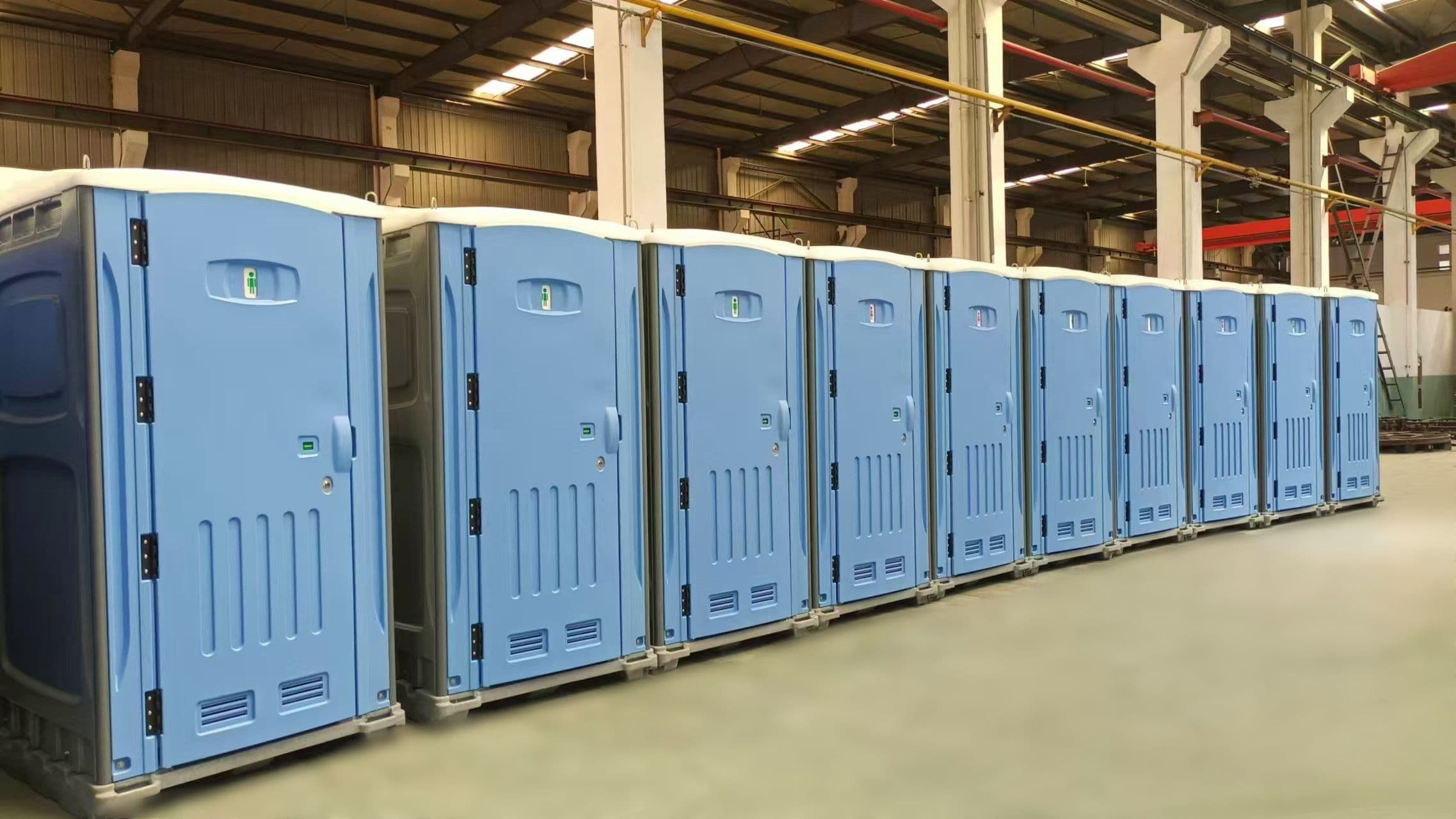
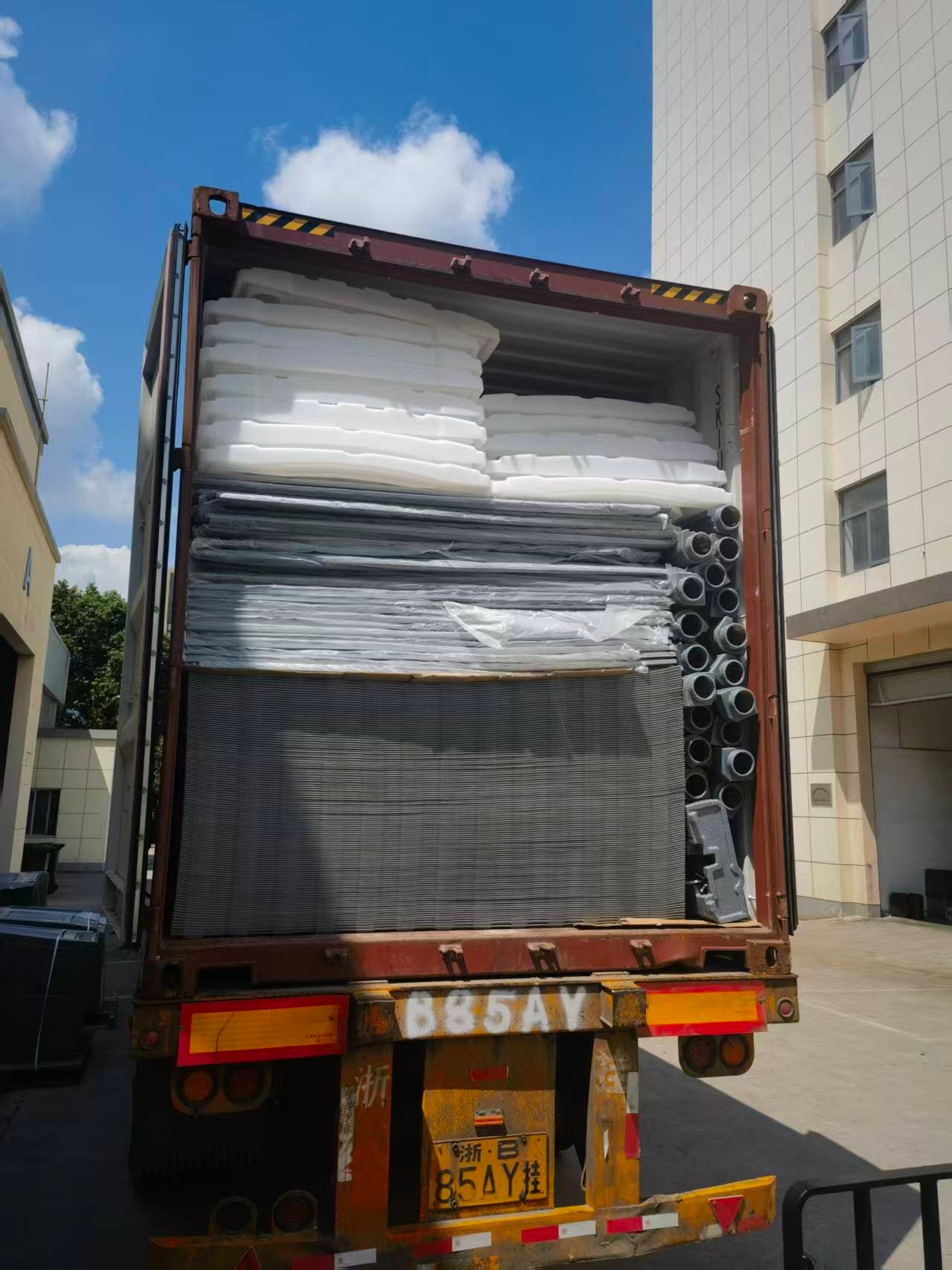
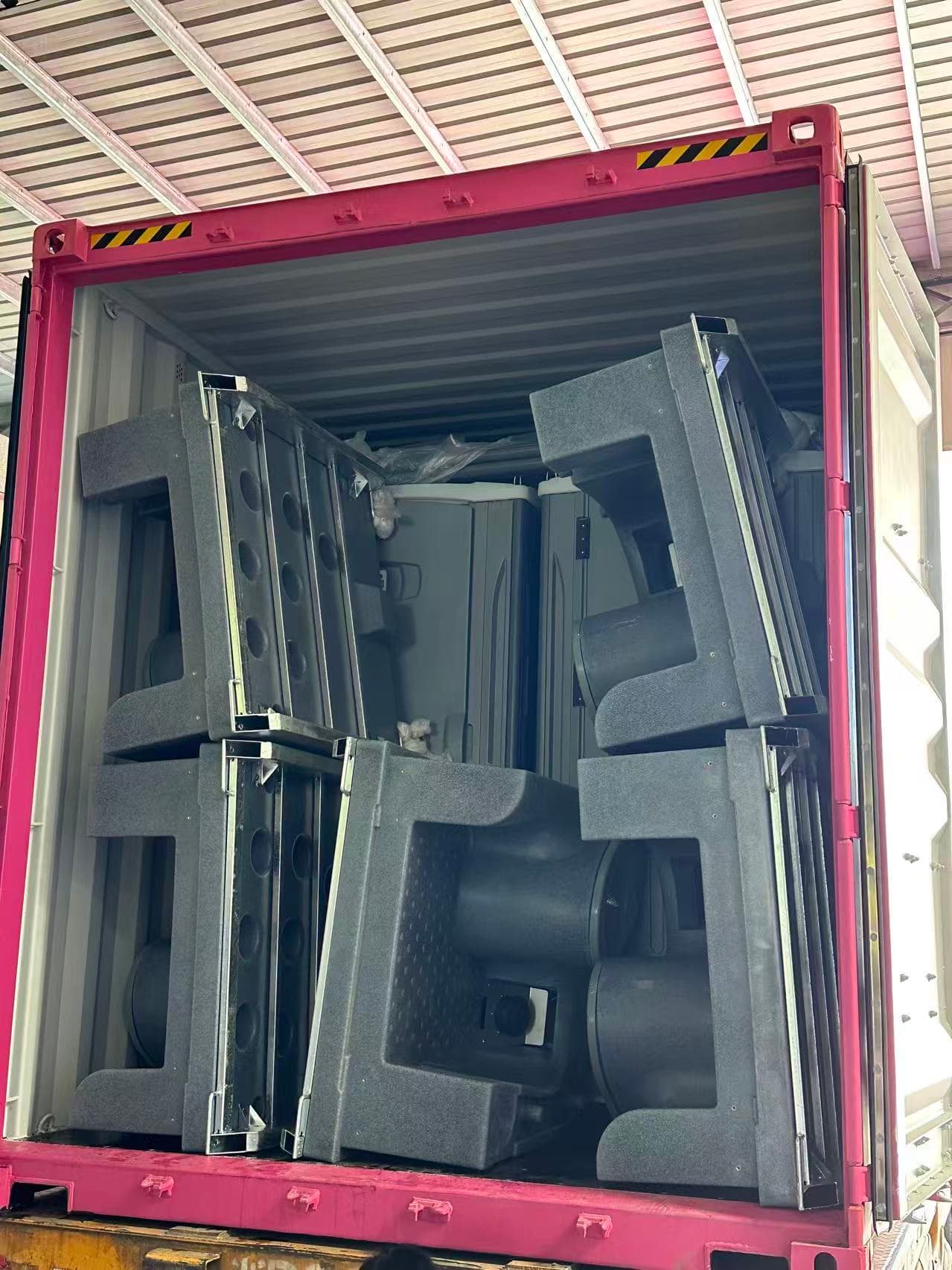
A 40HQ container can carry up to 54 Sunrise PT-360 portable toilets or up to 62 PT-370 units in knock-down form, under the corresponding packing configurations. For applicable standard toilet and shower models shipped fully assembled, Sunrise's loading reference is 20 units per 40HQ. The PT-370 figure covers its base, tanks, roof, door and wall panels; additional equipment and packaging must be checked against the final loading plan.
For a rental company or distributor importing portable toilets, that difference affects more than the shipping quotation. It changes how much work the receiving team must do, the equipment needed for unloading and how soon the units can enter service.
This guide uses Sunrise's product and export-packing experience to explain container quantities, assembly requirements and the choice between knock-down, partly preassembled and fully assembled delivery. A 40HQ means a 40-foot high-cube shipping container. The figures below apply to Sunrise products and should not be used as universal capacities for every manufacturer's toilets.
Portable Toilet Loading Quantities: Sunrise 40HQ Reference
| Product | Shipping condition | Units per 40HQ | Configuration note |
|---|---|---|---|
| PT-360 portable toilet | Knock-down | Up to 54 | Confirm the selected equipment and packing plan |
| PT-370 portable toilet | Knock-down | Up to 62 | Base, tanks, roof, door and wall panels |
| Other Sunrise standard toilet models | Knock-down | More than 40 | Model-specific; excludes accessible toilets and showers |
| Sunrise accessible portable toilets | Knock-down | Up to 32 | Confirm the applicable model and packing configuration |
| Sunrise portable shower cabins | Knock-down | More than 80 | Confirm the selected model and equipment |
| Applicable standard toilet models | Fully assembled | 20 | Confirm model and configuration; not an accessible-toilet loading figure |
| Applicable shower cabin models | Fully assembled | 20 | Confirm model and configuration |
These are loading references for the stated product groups, not guaranteed quantities for every order. Pallets, additional fittings, spare parts, protective packaging and mixed-model orders can change the final count. Confirm the packing list and loading plan before fixing your order quantity.
The PT-370 reference specifically covers the main cabin components: base, tanks, roof, door and wall panels. It should not be read as a promise that every optional accessory is included within the same 62-unit loading plan.
For dimensions and available configurations, review the PT-360 portable toilet and PT-370 portable toilet specifications. Larger cabins and different product designs need their own packing calculations, including accessible portable toilets and portable shower cabins.
What Does Flat-Pack or Knock-Down Delivery Mean?
Flat-pack portable toilets are shipped with major components separated for assembly at the destination. The term is often used alongside knock-down or unassembled delivery. It does not mean every component is flat: moulded tanks and bases still have substantial depth and shape.
Fully assembled delivery uses more space per cabin but removes much of the destination assembly work. Partly preassembled delivery sits between these approaches, with an agreed selection of components fitted before shipment.
| Delivery option | Main advantage | Work at the destination | What to confirm |
|---|---|---|---|
| Knock-down | Greater loading quantity for the applicable model | Sort components, assemble and inspect units | Complete parts list, instructions, tools and labour |
| Partly preassembled | Can reduce local assembly while retaining some packing efficiency | Complete the agreed remaining assembly and checks | Exactly which parts arrive fitted and the revised loading quantity |
| Fully assembled | Less cabin assembly before deployment | Unload, inspect and complete site preparation | Space per unit, handling arrangements and readiness checks |
Palletisation is a separate packing decision. A knock-down shipment may also be palletised; “palletised” and “assembled” do not describe the same thing.
Why Loading Capacity Cannot Be Calculated from Cabin Dimensions Alone
The outside dimensions of an assembled toilet do not show how its separate components will fit together inside a container. Once the cabin is dismantled, the packing problem includes large moulded bases, tanks, panels, roofs and many smaller parts.
In Sunrise's loading process, the team plans the larger toilet bases and tanks first. Suitable smaller components and customised parts can then be positioned in usable gaps around those larger items. The product design and the loading team's practical experience both influence how effectively that space can be used.
This is why two products with similar assembled dimensions may have different knock-down loading quantities. The shape of the base, the tank arrangement, the way panels stack and the amount of preassembly all affect the result.
Efficient loading must also leave a workable unloading process. Ask how components will be identified, protected, secured and counted when the container arrives. Space savings have little value if the receiving team cannot find the parts needed to complete each unit.
For a mixed order, request a combined loading plan. A container carrying standard toilets, accessible units, showers and spare parts cannot be calculated by adding the maximum capacities listed for separate single-product shipments.
How Long Does It Take to Assemble a Portable Toilet?
Sunrise's reference assembly time is approximately 20 minutes per portable toilet with two experienced workers working together. This is an assembly benchmark, not a combined allowance for unloading the container, checking the shipment and preparing every unit for service.
For labour budgeting, two people working for 20 minutes use 40 person-minutes, or approximately 0.67 labour-hours per toilet. If each worker's fully burdened hourly cost is R, the reference assembly labour cost is approximately 0.67 × R per unit.
Use the benchmark as a starting point. A new team may need more time, and a different model or degree of preassembly may change the work involved. Budget separately for unloading, component sorting, missing-part checks, final inspection and any site connections or preparation.
Sunrise provides installation instructions and assembly videos to help receiving teams understand the process. Before ordering a full container, review the instructions for the selected configuration and confirm the tools and workspace your team will need.
Where labour is expensive or an event deadline is close, ask which components can be preassembled at the factory. This may be more useful than choosing between two extremes of completely dismantled and fully assembled supply.
Can Pallets Reduce Unloading Work?
Pallet packing can make unloading easier when the receiving site has suitable handling equipment, but it may change how many units fit in the container. Sunrise can arrange palletised packing for customers with specific unloading requirements.
The decision should be based on the receiving operation. A customer with suitable equipment and limited manual labour may prefer organised pallet loads. Another customer with an experienced unloading crew may prioritise a different packing arrangement to make fuller use of the available space.
Before selecting pallets, confirm the proposed pallet dimensions, packed weights, handling access and the revised container quantity. Do not assume a palletised order will retain the same maximum loading count as another packing method.
Ask for the comparison in terms of the whole shipment: packing cost, freight allocation, unloading work, storage and assembly. The option with the highest unit count is not automatically the option with the lowest total receiving cost.
How Does Container Quantity Affect Shipping Cost per Toilet?
For a container carrying one product configuration, a useful first calculation is:
Ocean freight per unit = ocean freight charged for the container ÷ number of units shipped.
The following is an illustrative calculation, not a freight quotation or a record of a customer shipment. It assumes the same ocean-freight charge of US$6,000 per fully utilised 40HQ for two PT-370 packing options. Both configurations would need confirmation in an actual order.
| PT-370 packing scenario | Units per container | Assumed ocean freight | Ocean freight per unit |
|---|---|---|---|
| Fully assembled reference | 20 | US$6,000 | US$300.00 |
| Knock-down base configuration reference | 62 | US$6,000 | US$96.77 |
Under these assumptions, the allocated ocean freight differs by approximately US$203.23 per unit. This is a comparison of fully utilised container loads, not a quotation for shipping the same fixed order quantity. A partly filled container would give a different result.
It is also not a total-cost saving. To compare the options properly, include the quoted product and packing costs, all applicable transport and destination charges, unloading, assembly labour and final checks. Use current, route-specific quotations and avoid counting a charge twice if it is already included in a supplier's or forwarder's price.
For the same intended finished product, the practical question is whether the additional destination work costs less than the shipping and packing savings. Local labour rates, available equipment and the required deployment date can change the answer.
For mixed-product containers, a simple average across all units can hide substantial differences in space use. Ask for a clear cost-allocation basis before comparing a small toilet component with an assembled cabin or a larger accessible unit.
Which Shipping Option Suits Rental Fleets and Event Buyers?
Knock-down delivery is worth evaluating when a distributor or rental operator can organise local assembly and wants to use container space efficiently. The buyer needs a receiving process that covers component identification, assembly, checks and storage before deployment.
Partly preassembled delivery can suit customers who want to reduce local labour without shipping every cabin fully assembled. Sunrise can discuss which components should arrive fitted and recalculate the loading plan around that requirement.
Fully assembled delivery can be useful when the receiving team has limited assembly capacity or the units are needed for a tightly scheduled project. For concerts, music festivals and other large events, compare the available preparation window as well as freight cost. The container still needs to be unloaded and the units inspected and prepared for their intended use.
If you are also choosing the model itself, use the portable toilet buying guide for rental companies to review materials, tank capacity, servicing access and spare parts alongside the shipping decision.
What Should You Confirm Before Ordering a Container?
Give the supplier enough information to prepare a model-specific proposal:
- The models and quantities required, including any mixed products.
- The exact configuration and accessories for each model.
- The destination country, port and intended deployment date.
- Your preferred level of preassembly.
- Whether pallets are required and what unloading equipment is available.
- Your assembly team's experience and local labour constraints.
- Any spare parts or additional components to include in the shipment.
Then request a packing list and loading plan showing the agreed quantity, which components arrive fitted or separate, and the assembly guidance for that configuration. For a 20-foot container, obtain a separate calculation rather than assuming it holds half the 40HQ quantity.
Frequently Asked Questions
Can the PT-370 loading quantity of 62 units include every optional accessory?
The 62-unit PT-370 reference covers the base, tanks, roof, door and wall panels. Optional equipment, extra spares, pallets and changes in preassembly need to be checked against the final packing plan. Do not apply the maximum quantity automatically to a different configuration.
How many accessible toilets or shower cabins fit in a 40HQ?
Sunrise's knock-down loading references are up to 32 accessible portable toilets and more than 80 portable shower cabins per 40HQ, subject to the applicable model and packing configuration. These are separate product-loading references, not quantities that can be combined within one container. The 20-unit fully assembled standard-toilet reference does not establish an assembled accessible-toilet capacity.
Does a 20-foot container hold half as many toilets as a 40HQ?
Do not use a fixed half-capacity rule. The components, container type and packing arrangement require a separate plan. Sunrise can review 20-foot and 40HQ options once the model, configuration and order mix are known.
Is flat-pack delivery always the cheapest option?
No. It can reduce allocated freight per unit, but the buyer must also consider unloading, local assembly, tools, inspections and preparation time. Palletised, partly preassembled or fully assembled delivery may be a better fit for a particular receiving operation.
Request a Loading Plan for Your Order
Send Sunrise your preferred models, quantities, destination port and packing requirements. Let us know whether your team can assemble units locally and whether you need pallets or additional factory preassembly.
We can review the configuration, prepare a loading proposal and provide installation instructions or videos for your team. You can compare Sunrise portable toilet models or request a container-loading plan for your next fleet or project order.