
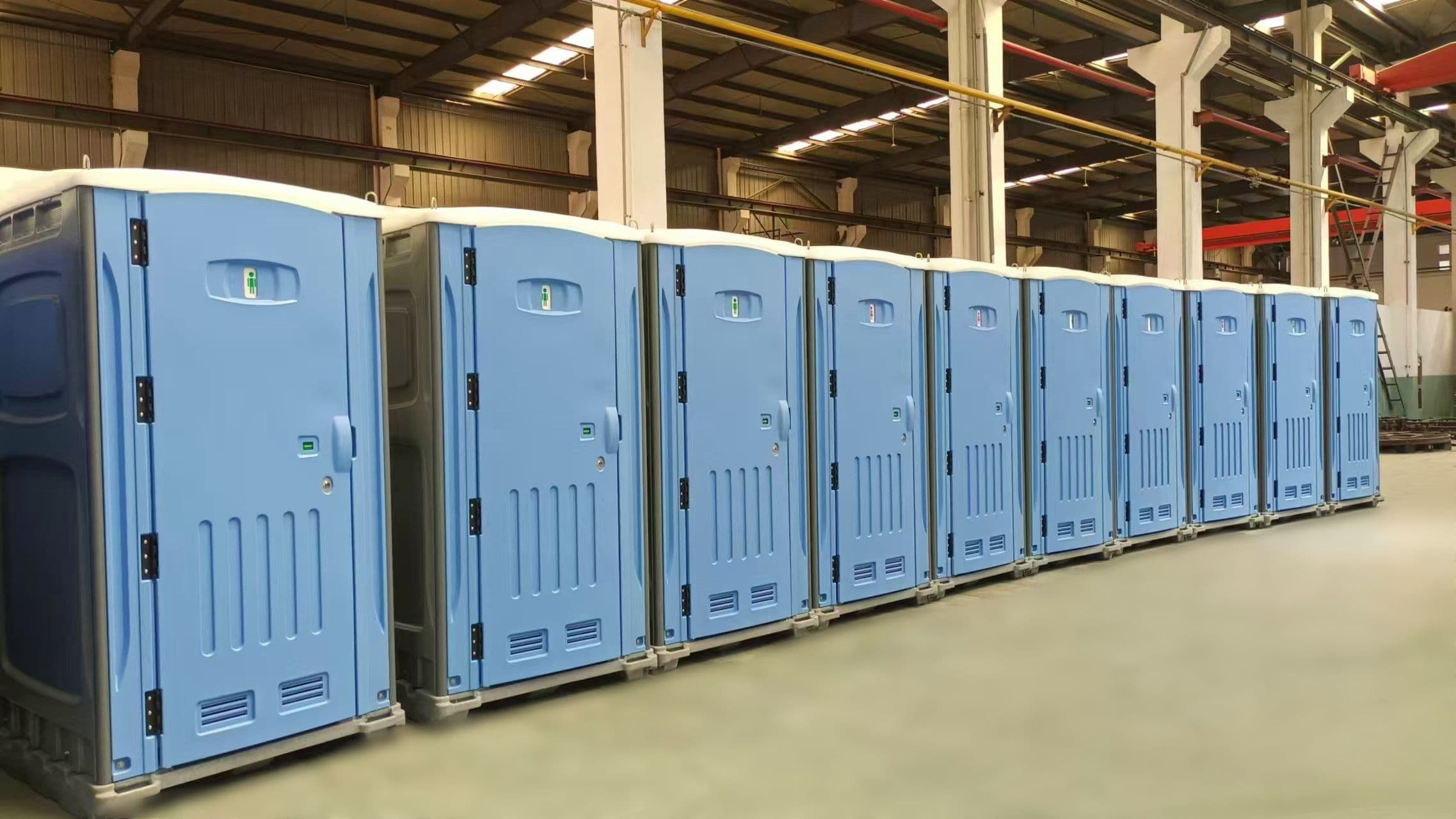
For a rental company, a portable toilet is not simply a product purchased and sold once. It is a working asset that may be transported, cleaned, serviced and rented out repeatedly for years. A difference that looks minor on a quotation can later affect repair frequency, service time, user satisfaction and the useful life of the fleet.
This is why a bulk purchasing decision should not be based on unit price or waste-tank capacity alone. The right portable toilet depends on where it will be used, who will use it, how often it will be serviced and how it will be handled in daily operations.
The following checklist is based on practical considerations encountered in portable sanitation manufacturing and international rental markets. It is designed to help rental operators, distributors and project buyers compare products before confirming a bulk order.
Portable Toilet Purchasing Checklist
| What to check | Why it matters |
|---|---|
| Intended application | Construction sites, mines, events and fixed installations place different demands on a unit. |
| Plastic formulation and structure | The right balance of stiffness and toughness helps reduce both cracking and deformation. |
| Waste-tank capacity | Capacity should match user volume and the actual cleaning schedule. |
| Base and flush configuration | Heavy-duty components are not automatically the best option for every user. |
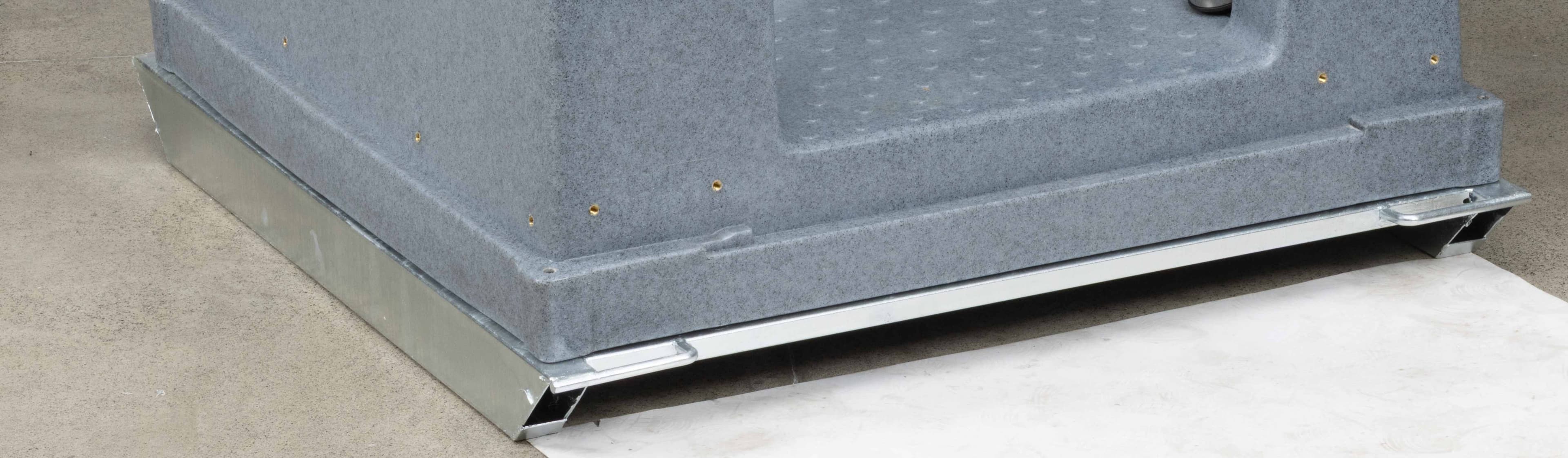
| Discharge-valve design | Local requirements, service equipment, leakage prevention and site security may all affect the design. |
| Cleaning and maintenance access | Faster servicing can reduce labour cost and fleet downtime. |
| Doors and high-wear parts | Frequently used parts should be durable, replaceable and available as spares. |
| Climate resistance | UV exposure, heat, cold and coastal conditions affect materials differently. |
| Packing and container loading | Loading efficiency can materially change the landed cost per usable unit. |
| Supplier support | Specifications, inspection, spare parts and after-sales response matter throughout the product life cycle. |
1. Define the Application Before Comparing Models
The first question should not be “Which model has the largest tank?” or “Which model is the heaviest?” It should be “How will this toilet actually be used?”
A basic static-tank toilet can be a practical choice for construction sites and general rental fleets because the configuration is simple and straightforward to service. A flushing model or a unit with a hand basin may provide a better user experience at events or premium sites, but it also introduces pumps, hoses and freshwater management that must be maintained. A sewer-connect unit can suit a longer-term location with suitable infrastructure, while public projects may require an accessible design and compliance with local requirements.
Buyers should define at least five points before requesting a quotation:
- the type of site;
- the expected number and type of users;
- the planned cleaning and emptying frequency;
- the method used to move and service the toilets; and
- any local accessibility, wastewater or safety requirements.
This information allows the supplier to recommend a configuration instead of simply offering the most expensive or highest-capacity model.
2. Look for a Balance Between Structural Stiffness and Impact Toughness
HDPE is widely used in commercial portable toilets because it is suitable for moulded outdoor products, but the material name alone does not tell a buyer how a wall panel will behave in a rental fleet. Material formulation, moulding quality and structural design all influence performance.
One practical example comes from forklift handling. Rental toilets are frequently moved around yards and work sites, and a forklift tine may accidentally strike a wall or door panel. In our experience, a panel designed mainly to feel extremely hard or rigid can be more likely to crack under a sudden impact. At the other extreme, a panel that is too flexible may gradually deform during transport or long-term service.
For this reason, Sunrise uses a modified HDPE formulation for its wall panels and has refined the formulation to pursue a practical balance between stiffness and impact toughness. The objective is not maximum hardness. It is to reduce the two different failure risks that rental operators commonly want to avoid: impact cracking and loss of shape.
When assessing a sample, do not judge the product only by pressing the wall panel by hand. Ask the supplier about:
- the material used for each major component;
- how the formulation is controlled between production batches;
- reinforcement around corners, door frames and other stressed areas;
- consistency of moulding and wall formation; and
- how damaged panels can be replaced.
Thickness can be useful information, but a single thickness figure does not describe the performance of the complete structure. A well-designed product combines appropriate material properties with reinforcement in the places that receive the most stress.
Practical takeaway: Maximum hardness does not necessarily mean better fleet durability.

3. Select Waste-Tank Capacity According to the Service Model
Waste-tank capacity is often presented as a simple comparison: the larger the number, the better the toilet. In practice, capacity is a service-planning decision.
A larger tank can provide more reserve capacity and may be valuable at a fixed location with a known group of occasional users, especially when a service vehicle cannot visit frequently. It can reduce the risk of the tank reaching its limit between scheduled visits.
However, a large tank should never be treated as a reason to delay routine cleaning. At a busy construction site, event or public location, waiting until a high-capacity tank is nearly full can lead to odour, poor hygiene and an unpleasant user experience. Emptying frequency and cleaning frequency are related, but they are not the same thing.
The right capacity depends on:
- expected daily use;
- peak demand rather than only average demand;
- the planned service interval;
- access for service vehicles;
- transport and handling considerations; and
- the sanitation standard expected by the end customer.
Sunrise has developed portable toilets with different tank capacities and configurations for different end-user profiles. This gives buyers the option to match the asset to the operating model rather than applying one high-capacity design to every location.
Before ordering, ask the supplier to explain why a particular tank size suits your service schedule. A useful recommendation should consider the whole operating scenario, not only the headline capacity.
Practical takeaway: The best waste tank is the one that supports a safe, realistic service schedule—not necessarily the largest available tank.
4. Match the Base and Flush System to the People Using It
Base material affects weight, handling and performance in demanding environments. A plastic base can reduce the overall weight of a portable toilet, which may make routine transport and manual positioning easier. For many general rental applications, this is a meaningful advantage.
Customers working in mines, on construction sites and in other rough operating environments may prefer a reinforced metal base. These units can be exposed to frequent movement, uneven surfaces and less delicate handling, so the buyer may prioritise stability and heavy-duty construction over minimum weight.
The same application-specific thinking should be applied to internal components. A rugged flush foot pump that is more resistant to puncture or rough use can be well suited to construction users wearing safety footwear. That does not mean it is the best choice for a wedding, festival or public event. A heavy-duty pump may require greater foot pressure, which can be inconvenient for children, older users or guests wearing ordinary shoes.
| Application | Base consideration | Flush-system consideration |
|---|---|---|
| Construction site | Stability and resistance to rough handling | Durable, easily serviced components |
| Mine or heavy industrial site | Reinforced base may be preferred | Protection against damage and misuse |
| Event or public function | Lower weight may simplify positioning | Light, intuitive operation for a wide range of users |
| Fixed low-frequency location | Capacity and site access may take priority | Simple maintenance and reliable long-term operation |
Buyers should therefore compare components by suitability, not merely by weight or apparent strength.
Practical takeaway: A portable toilet should be configured for its actual users, not simply fitted with the heaviest-duty components available.
5. Review the Discharge Valve, Local Requirements and Site Security
The discharge system deserves more attention than its valve diameter. Depending on the market and servicing method, customers may require different valve arrangements, connections or protective features.
Some customers in Australia and New Zealand have asked Sunrise to adapt discharge-valve designs to suit local wastewater handling requirements and operating practices. A buyer should confirm the applicable rules with the relevant local authority or sanitation professional, then provide the technical requirement to the manufacturer before production.
Site conditions also matter. Toilets placed in public areas, on construction sites or at remote locations may be exposed to unauthorised operation, accidental opening, component theft or leakage. Sunrise has developed several discharge-valve arrangements after considering requirements from different countries as well as the security conditions at the point of use. Patent applications have been filed in China for certain anti-theft and leak-control design features.
Before approving the discharge system, confirm:
- the required outlet and connection arrangement;
- compatibility with the operator's servicing equipment;
- access for cleaning and maintenance;
- protection against accidental or unauthorised opening;
- measures intended to reduce leakage risk; and
- whether local review or approval is required.
The supplier can adapt a product only when the buyer communicates the applicable technical and regulatory requirements clearly. No manufacturer should assume that one valve design complies with every local wastewater rule.
Practical takeaway: Select the discharge valve according to local requirements, servicing equipment and site-security conditions—not discharge speed alone.
6. Evaluate Cleaning and Maintenance Before Purchase
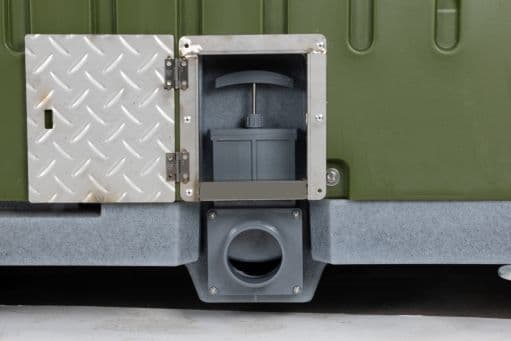
For a rental operator, the cost of a toilet includes the time required to clean, inspect and return it to service. A configuration that looks attractive in a catalogue may be less practical if technicians cannot reach important areas or replace routine service parts efficiently.
During a sample inspection, check whether internal surfaces can be rinsed easily and whether the toilet has unnecessary gaps or difficult cleaning points. Review how technicians access the pump, hoses, valves and fasteners. Ask whether a wall, door or plumbing component can be replaced individually after localised damage.
A useful maintenance review should include:
- access to the waste tank and discharge points;
- removal and replacement of pumps, hoses and valves;
- cleaning around the seat, urinal and hand basin, if fitted;
- availability of ordinary fasteners and washers;
- tools required for routine repair; and
- written assembly or maintenance guidance.
It is often better to identify these issues with one sample unit than after a full container arrives. If the toilets will be supplied in knock-down form, the buyer should also complete a trial assembly with the intended local team.
7. Inspect Doors, Hardware and Other High-Wear Parts
The door is one of the most frequently used parts of a portable toilet. It also receives stress during transport, positioning and repeated opening and closing. A bulk buyer should check alignment, frame support and the operation of the lock or occupancy indicator.
Other high-wear items may include foot pumps, hoses, valves, door springs, hinges, locks, seats, covers and plumbing fittings. Their exact service life depends on usage and handling, so it is more useful to ask whether they are replaceable and continuously available than to rely on a broad durability claim.
For an initial order, discuss a spare-parts package based on the number and configuration of units. Original or model-specific components are particularly important when dimensions, connections or mounting points differ from locally available parts. The supplier should also identify which ordinary hardware can be sourced locally.
Spare parts are not an admission that a product is unreliable. They are part of responsible fleet planning. A low-cost replaceable component can return a unit to service quickly; waiting weeks for one small part can keep an otherwise usable toilet out of the rental fleet.
8. Consider Climate and Outdoor Exposure
Portable toilets are outdoor assets, but “outdoor use” covers very different environments. Strong UV exposure, high temperatures, freezing conditions and coastal air create different risks.
For high-UV markets, ask what UV-stabilisation measures are used and request the relevant test documents where available. In hot conditions, review not only the plastic body but also rubber components, hoses, seals and adhesives. In cold markets, ask about low-temperature impact performance and the operating requirements of water-based flushing systems. Near the coast, pay attention to the corrosion resistance of metal bases, fasteners and other hardware.
Avoid relying on a general statement such as “suitable for all weather.” A more useful evaluation identifies the destination climate, the product configuration and the evidence available for the relevant materials or model.
9. Calculate Landed Cost, Not Only the FOB Unit Price
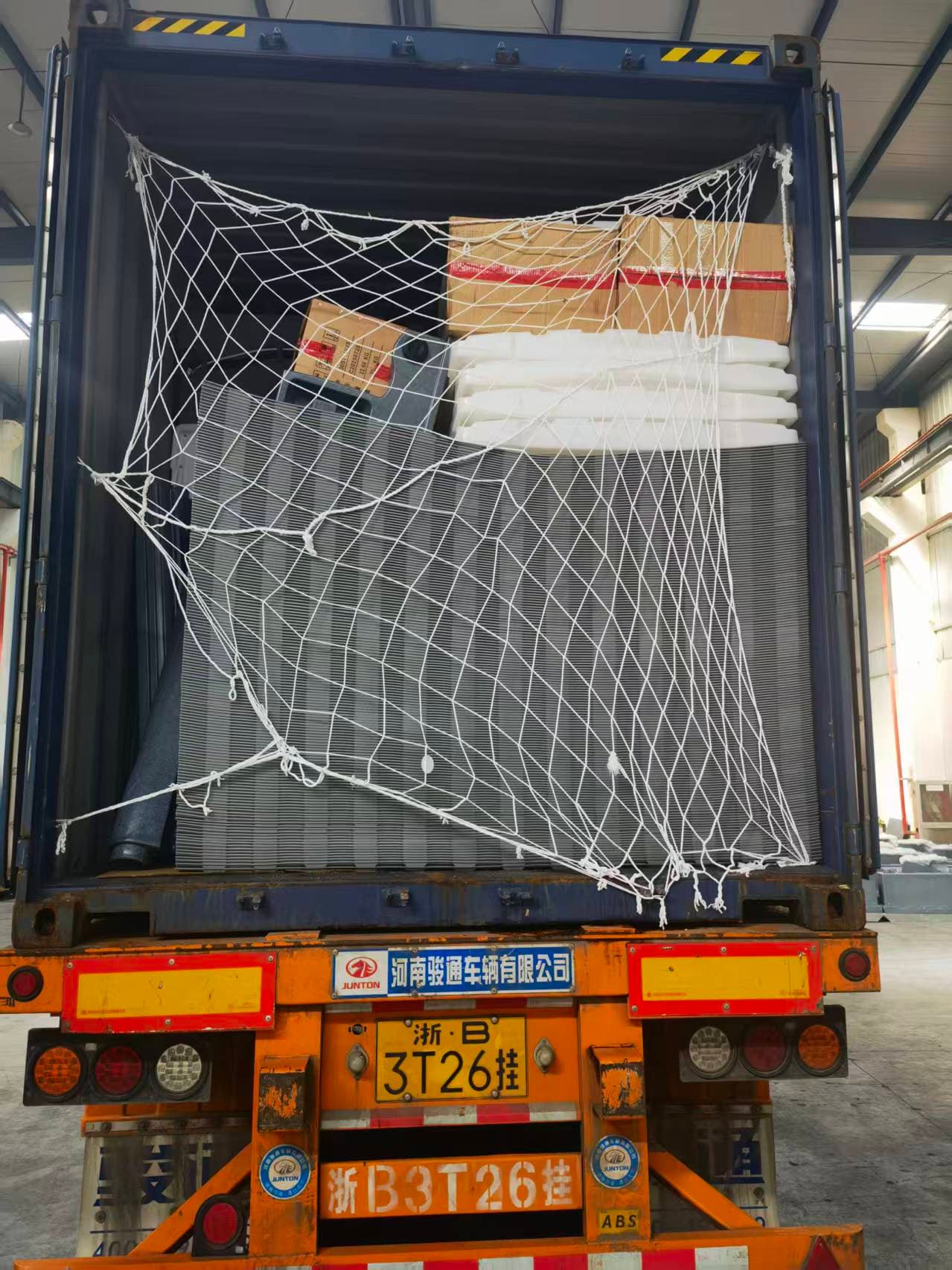
Container loading can change the real cost of an imported portable toilet. The same external model may have a different loading quantity depending on whether it is shipped assembled or in knock-down form, the base structure, internal equipment, protective packing and the spare parts included.
Knock-down packing can improve container utilisation, but the buyer must account for local assembly labour, tools, instructions and quality control. Assembled units can be deployed more quickly after arrival, but normally use more container space. Neither method is automatically better.
Before placing a bulk order, request:
- a preliminary packing list;
- the proposed container-loading plan;
- the assumed product configuration;
- an explanation of which parts are assembled or packed separately;
- protection methods for panels, roofs and accessories; and
- assembly guidance if the units are shipped knock-down.
Do not treat a loading estimate as final until the model, options and order mix are confirmed. Compare quotations using the landed cost per usable unit, including ocean freight, local assembly and expected handling—not the FOB price alone.
10. Verify the Supplier and Final Specification
Before committing to a bulk order, verify both the supplier and the exact product to be manufactured. A professional purchasing process should leave as little room as possible for assumptions.
Ask to review the production process, material description, product drawings or specification sheet, available test documents and quality-control procedure. Confirm the model, colour, logo, internal configuration, base, valve arrangement, accessories, spare parts, packing method and loading plan in writing.
Where practical, use a sample, factory visit, live video inspection or independent pre-shipment inspection. The purpose is not simply to confirm that the factory exists. It is to make sure that the approved configuration is the one entering production and that both sides use the same acceptance criteria.
The lowest quotation can become expensive if the product is difficult to service, poorly matched to the application or unsupported after delivery. Supplier evaluation should therefore include communication quality, engineering response, spare-parts continuity and the ability to address market-specific requirements.
Final Recommendation
There is no single portable toilet specification that is best for every rental fleet. The correct choice depends on the operating environment, user profile, service schedule, handling method, local requirements and total delivered cost.
Start by defining the application. Then compare material behaviour, tank capacity, base and pump options, discharge design, maintenance access, spare parts and loading efficiency as one complete system. This approach produces a more useful comparison than choosing a model by price, weight or capacity alone.
Sunrise works with rental operators, distributors and project buyers to review these factors before production. You can compare our portable toilet models or request specifications and a preliminary loading plan for your target market, quantity and destination port.
Frequently Asked Questions
What is the best material for a commercial portable toilet?
HDPE is widely used for commercial portable toilets, but the material name by itself is not enough to determine quality. Buyers should also consider the formulation, moulding consistency, structural reinforcement and the balance between stiffness and impact toughness. A panel that feels very hard can still crack under sudden impact, while an overly flexible panel may deform.
Is a larger portable toilet waste tank always better?
No. A larger tank provides additional reserve capacity, but it should not encourage an operator to postpone routine cleaning at a busy site. Capacity should be matched to user volume, peak demand, service access and the planned emptying and sanitation schedule.
Is a metal base better than a plastic base?
It depends on the application. A plastic base can reduce total weight and make handling easier. Customers in mines, construction sites and other demanding environments may prefer a reinforced metal base for stability and resistance to rough handling. Buyers should consider the site and handling method rather than choosing by material alone.
What spare parts should a rental company order with portable toilets?
The list depends on the model, but commonly discussed parts include pumps, hoses, valves, door springs, hinges, locks or occupancy indicators, seats, covers, fasteners, washers and plumbing fittings. Ask the supplier which parts are model-specific and which can be purchased locally.
How many portable toilets fit in a 40HQ container?
There is no reliable universal number. Loading quantity depends on the model, whether it is assembled or knock-down, the base design, internal options, packing protection and the mix of products in the order. The supplier should prepare a loading proposal after the final configuration is confirmed.
Should portable toilets be shipped assembled or knock-down?
Knock-down packing can improve container utilisation but requires local labour, tools and assembly control. Assembled units can be deployed faster but normally occupy more space. The better option depends on freight cost, local labour capability and the buyer's preferred quality-control process.